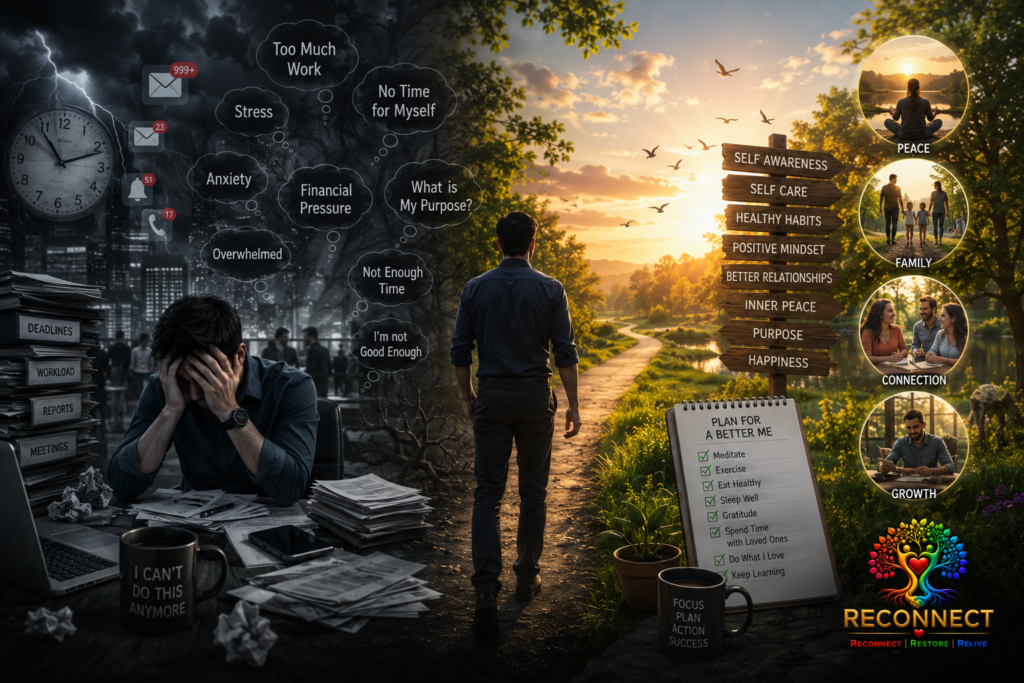
Have You Ever Felt Like You’re Just Going Through the Motions?
You wake up tired, even after a full night’s sleep.
You answer emails, attend meetings, take care of your family, smile at friends, and tick items off your to-do list—but inside, you feel emotionally drained.
You tell yourself, “I’m just busy.”
Weeks turn into months.
The exhaustion becomes your new normal.
This isn’t simply stress.
It could be silent burnout.
Unlike dramatic burnout, silent burnout develops gradually. There’s no sudden breakdown. Instead, your energy, motivation, confidence, and joy slowly disappear until you’re surviving rather than living.
The encouraging news is that burnout is not permanent. With awareness, practical habits, and meaningful human connection, you can recover and thrive again.
What Is Silent Burnout?
Silent burnout is a prolonged state of emotional, mental, and physical exhaustion that often goes unnoticed because life appears to continue as usual.
Many people experiencing burnout continue performing at work, caring for their families, and meeting responsibilities. Yet internally they feel disconnected, overwhelmed, and emotionally empty.
Common causes include:
- Long working hours
- Constant digital notifications
- Financial pressure
- Relationship challenges
- Unrealistic expectations
- Lack of quality sleep
- Never taking time to recharge
- Trying to please everyone
Burnout is not a sign of weakness.
It is often the result of carrying too much for too long without adequate recovery.
Why Silent Burnout Is Increasing
Modern life rewards busyness.
Technology keeps us connected 24 hours a day.
Many professionals answer emails after dinner.
Parents juggle careers, children, and household responsibilities.
Students feel pressure to succeed academically while maintaining active social lives.
Social media constantly encourages comparison, making many people believe they are falling behind.
As a result, our minds rarely experience true rest.
10 Warning Signs of Silent Burnout
1. You’re Always Tired
No amount of sleep seems enough.
Your body rests.
Your mind never does.
2. Small Problems Feel Huge
Minor inconveniences suddenly trigger frustration or anger because your emotional reserves are depleted.
3. You Feel Emotionally Numb
You don’t feel excited anymore.
You don’t feel deeply sad either.
You simply feel… nothing.
4. Your Relationships Begin to Suffer
You withdraw from conversations.
You stop listening.
You become impatient with the people you love most.
Burnout often creates emotional distance before people realize what’s happening.
5. You Lose Motivation
Tasks that once excited you now feel like obligations.
Even hobbies seem exhausting.
6. You Can’t Concentrate
Your attention jumps constantly.
You reread the same paragraph several times.
Simple decisions become difficult.
7. You Feel Guilty Whenever You Rest
You believe productivity equals self-worth.
Even taking a break feels like wasting time.
Rest is no longer seen as recovery.
It feels like failure.
8. Physical Symptoms Increase
Burnout frequently appears through the body:
- Headaches
- Muscle tension
- Neck pain
- Digestive problems
- High blood pressure
- Poor sleep
- Frequent illnesses
9. You Start Avoiding People
Conversations require energy you no longer have.
Instead of Reconnecting with others, you isolate yourself.
Unfortunately, isolation often makes burnout worse.
10. You No Longer Feel Like Yourself
Perhaps the biggest warning sign is this simple thought:
“I don’t know what’s happened to me.”
If that sentence feels familiar, don’t ignore it.
Burnout vs. Everyday Stress
Stress and burnout are related but different.
Stress often feels like having too much to do.
Burnout feels like having nothing left to give.
Stress usually improves after rest.
Burnout requires intentional recovery, lifestyle changes, and emotional healing.
How Silent Burnout Affects Relationships
Burnout rarely stays at work.
It follows us home.
Partners may feel ignored.
Children notice emotional distance.
Friendships fade because we stop making time.
Communication becomes shorter.
Patience disappears.
Conflict increases.
Often, people believe their relationship is failing when the real issue is untreated emotional exhaustion.
Healing yourself strengthens every relationship around you.
The Hidden Cost of Constant Busyness
Being busy isn’t the same as being productive.
Many people spend years chasing promotions, financial success, and external achievements while neglecting their emotional health.
Eventually they reach their goals but discover they have sacrificed:
- Peace
- Family time
- Physical health
- Friendships
- Joy
- Purpose
Success means little if you no longer have the energy to enjoy it.
7 Practical Steps to Recover from Burnout
1. Slow Down Without Feeling Guilty
Recovery begins by giving yourself permission to pause.
Even fifteen minutes of quiet each day can help reset your mind.
2. Create Digital Boundaries
Turn off unnecessary notifications.
Avoid checking emails before bed.
Have technology-free meals.
Your brain needs uninterrupted moments to recover.
3. Prioritize Sleep
Aim for consistent sleep and wake times.
Good sleep restores emotional resilience.
4. Move Your Body
Walking, stretching, cycling, or light exercise releases stress and improves mood.
You don’t need an intense workout.
Consistency matters more than intensity.
5. Talk to Someone
Don’t carry everything alone.
Speak with a trusted friend, family member, mentor, or coach.
Sometimes being heard is the first step toward healing.
6. Reconnect With What Gives You Joy
Think about activities you once loved.
Reading.
Music.
Photography.
Gardening.
Prayer.
Nature.
Laughter.
Bring one of them back into your weekly routine.
7. Ask for Help Before You Reach Breaking Point
Seeking support is not a weakness.
It is one of the strongest decisions you can make.
The earlier you address burnout, the easier recovery becomes.
The Reconnect Approach
At Reconnect, we believe lasting change happens when people Reconnect with the areas of life that matter most.
We help individuals strengthen five essential connections:
- Reconnect with Yourself
- Reconnect with Your Family
- Reconnect with Your Purpose
- Reconnect with Your Relationships
- Reconnect with Peace of Mind
Burnout recovery is not about doing more.
It’s about rediscovering what truly matters.
Reflection Questions
Take a few quiet moments and ask yourself:
- When was the last time I felt genuinely happy?
- Am I surviving or truly living?
- What is draining most of my energy?
- What gives me peace?
- Who do I need to Reconnect with?
- What one small change can I make this week?
Awareness is the beginning of transformation.
Final Thoughts
Silent burnout doesn’t happen overnight, and recovery won’t either.
But every meaningful journey begins with one decision.
Today can be that decision.
Choose to slow down.
Choose to Reconnect.
Choose to live intentionally instead of simply existing.
Because life isn’t measured by how busy we are.
It’s measured by the relationships we nurture, the peace we experience, and the purpose we discover along the way.
About Reconnect
Reconnect is dedicated to helping individuals, couples, parents, professionals, and students overcome stress, strengthen relationships, and build emotionally healthier lives through practical coaching and genuine human connection.
If you feel overwhelmed, emotionally exhausted, or disconnected from yourself or the people you love, remember this:
You don’t have to face it alone.
Take the first step today.
Reconnect. Restore. Relive.