“The greatest loneliness is not being alone—it is feeling unseen, unheard, and emotionally disconnected even when surrounded by people.”
Introduction
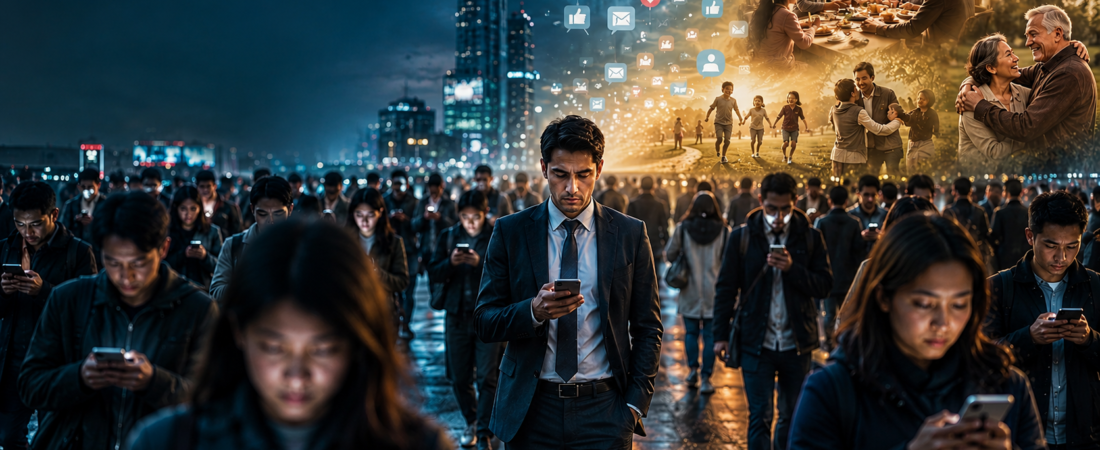
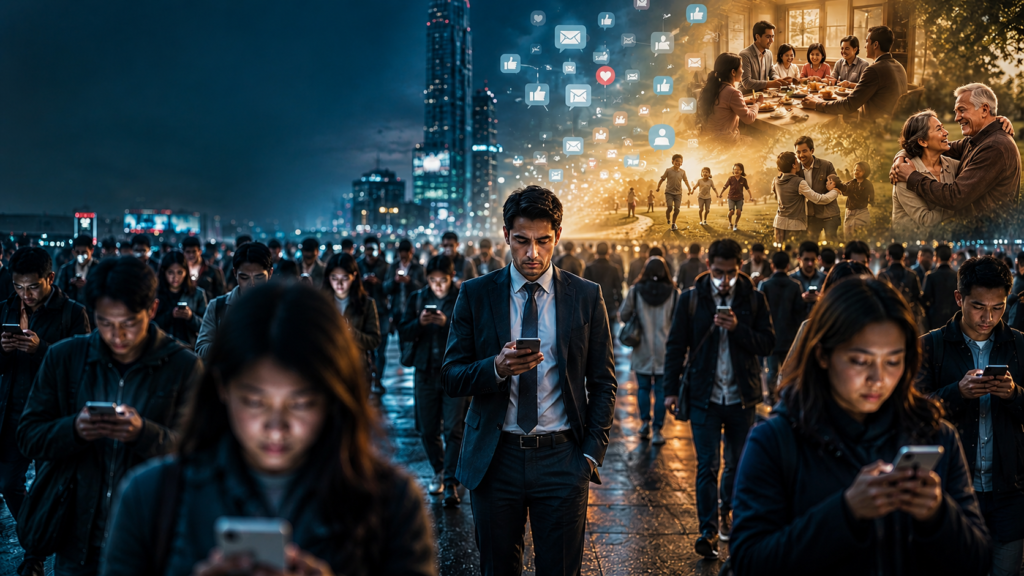
Take a moment and look around.
Almost everyone has a smartphone in hand. We send hundreds of messages every week, react to countless posts, join group chats, attend virtual meetings, and scroll endlessly through social media.
Yet something unexpected is happening.
People are feeling more isolated than ever before.
Despite living in the most digitally connected era in human history, millions quietly struggle with loneliness.
You may have hundreds of Facebook friends, thousands of Instagram followers, or multiple WhatsApp groups—but still go to bed feeling like no one truly understands you.
This isn’t just an emotional experience. It has become a global health challenge.
Loneliness is no longer about being physically alone.
It is about being emotionally disconnected.
The Hidden Face of Loneliness
Many people imagine loneliness as an elderly person living alone.
The reality is very different.
Loneliness affects:
- Busy professionals
- Entrepreneurs
- College students
- Teenagers
- Married couples
- Parents
- Retirees
- Remote workers
Some of the loneliest people are surrounded by others every day.
You can sit in a crowded office…
Attend family gatherings…
Travel on packed trains…
Even share a home…
…and still feel emotionally alone.
This silent loneliness often goes unnoticed because people continue smiling while hiding what they truly feel.
Why Are We Feeling More Lonely Than Ever?
1. Social Media Has Replaced Social Connection
Social media was designed to connect people.
Ironically, it often encourages comparison instead of connection.
Instead of meaningful conversations, we consume carefully edited versions of other people’s lives.
We compare our ordinary moments with someone else’s highlight reel.
Gradually we begin believing:
“Everyone else is happier than me.”
This creates emotional distance rather than emotional intimacy.
2. Conversations Have Become Notifications
Years ago, families gathered around dinner tables.
Today, many families sit together while everyone looks at separate screens.
Messages have replaced conversations.
Emojis have replaced emotions.
Typing has replaced listening.
Technology is wonderful—but it should never replace genuine human presence.
3. The Pressure to Look Perfect
Modern society constantly encourages perfection.
Perfect body.
Perfect career.
Perfect marriage.
Perfect children.
Perfect vacations.
People become afraid to admit they are struggling because they fear judgment.
When vulnerability disappears…
Connection disappears too.
4. Busy Lives Leave Little Time for Relationships
Many professionals spend:
- 8–12 hours working
- commuting
- answering emails after work
- scrolling before bed
Relationships slowly move to the bottom of the priority list.
The result?
Success may increase…
But connection decreases.
Signs You May Be Experiencing Emotional Loneliness
Loneliness isn’t always obvious.
Here are some subtle signs:
- You feel empty despite being busy.
- You have people around you but no one to confide in.
- Social gatherings leave you emotionally drained instead of fulfilled.
- You spend excessive time online hoping to feel connected.
- You often feel misunderstood.
- You avoid reaching out because you don’t want to “bother” anyone.
- You crave deeper conversations instead of small talk.
- You constantly feel that something is missing.
If several of these resonate with you, you’re not alone.
The Hidden Cost of Loneliness
Loneliness affects much more than emotions.
It can influence every area of life.
Mental Health
Long-term loneliness increases the risk of:
- Anxiety
- Depression
- Chronic stress
- Burnout
- Low self-esteem
Physical Health
Research shows prolonged loneliness is associated with:
- Poor sleep quality
- High blood pressure
- Reduced immunity
- Increased inflammation
- Higher risk of heart disease
Our emotional wellbeing and physical health are deeply connected.
Relationships
When people feel lonely, they may:
- withdraw emotionally,
- avoid difficult conversations,
- become overly dependent on others, or
- struggle to trust.
Over time, these patterns can weaken even loving relationships.
Workplace Performance
Lonely employees are more likely to experience:
- reduced creativity,
- lower motivation,
- disengagement,
- absenteeism, and
- burnout.
Healthy workplaces are built on trust and meaningful human connection—not just productivity.
The Difference Between Being Alone and Being Lonely
Being alone is a physical state.
Being lonely is an emotional experience.
You can enjoy solitude and feel peaceful.
You can also be surrounded by people and feel invisible.
Learning to enjoy solitude while nurturing healthy relationships creates emotional resilience.
How to Reconnect with Yourself and Others
Healing loneliness doesn’t happen overnight.
It begins with small, intentional steps.
1. Put the Phone Down During Conversations
Give someone your full attention.
Eye contact.
Active listening.
Presence.
These simple acts communicate care more powerfully than any text message.
2. Have One Meaningful Conversation Every Week
Instead of asking,
“How are you?”
Try asking,
- “What’s been on your mind lately?”
- “What’s something you’ve been struggling with?”
- “What made you smile this week?”
Depth builds connection.
3. Schedule Relationships Like Important Meetings
If relationships matter…
Put them on your calendar.
Call your parents.
Meet a friend for coffee.
Take your spouse for a walk.
Play with your children without distractions.
Small moments create lasting memories.
4. Join Communities
People thrive when they belong.
Consider joining:
- volunteer groups,
- sports clubs,
- book clubs,
- faith communities,
- hobby classes, or
- local support groups.
Shared experiences often become lifelong friendships.
5. Practice Gratitude
Every evening, write down three people who positively impacted your day.
Then thank one of them.
Gratitude strengthens relationships while shifting attention from what is missing to what is meaningful.
6. Ask for Help
Loneliness is not weakness.
It is a signal.
Just as physical pain tells us something needs attention, loneliness reminds us that we are created for connection.
Talking with a trusted friend, mentor, coach, or counselor can be the first step toward healing.
The Reconnect Approach
At Reconnect, we believe lasting wellbeing starts with authentic human connection.
Our coaching focuses on helping individuals:
- rebuild confidence,
- strengthen relationships,
- improve communication,
- manage stress,
- restore work-life balance, and
- rediscover purpose.
Real transformation begins when we stop trying to simply “fit in” and start building relationships where we feel accepted, valued, and understood.
Final Thoughts
Technology has given us extraordinary ways to communicate.
But communication is not the same as connection.
Likes are not love.
Followers are not friends.
Notifications are not conversations.
At the end of life, people rarely wish they had answered more emails or spent more hours online.
They wish they had loved more deeply, listened more patiently, forgiven more quickly, and spent more time with the people who mattered.
Today, take one small step.
Call someone.
Visit a friend.
Share a meal.
Start a conversation.
Or simply ask someone,
“How are you—really?”
That one question could change a life.
Perhaps even your own.
Conclusion
In a world overflowing with digital connections, the greatest need is still genuine human connection. Loneliness doesn’t have to define your story. By making intentional choices to Reconnect with yourself, your loved ones, and your community, you can begin building a life filled with meaningful relationships, purpose, and emotional wellbeing.
Remember: You were never meant to navigate life alone.
Call to Action
Feeling disconnected or overwhelmed?
At Reconnect, we’re here to help you rebuild meaningful relationships, strengthen emotional resilience, and rediscover balance in your life.
Book your coaching session today and take the first step toward Reconnecting—with yourself and the people who matter most.
WhatsApp on +91 84848 18476